Public History & Humanities

Some excerpts from hundreds of articles I’ve written about U.S. historic landmarks, public art, parks, museums, & cultural sites for the Clio Foundation

The Bison Paddock, Golden Gate Park

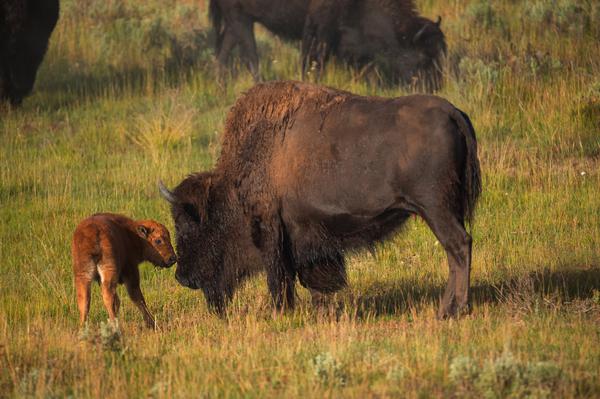
It is estimated that up to 60 million bison once grazed throughout the American West, roaming freely across the Great Plains between northern Mexico and Canada. Although bison are today considered a symbol of the American West, at the end of the 19th century, they were nearly wiped out to the point of extinction. By the mid-1800s, there were only a few hundred remaining, with almost no bison west of the Rockies. Bison are often associated with a now-vanished American frontier...
Wetlands Renaissance Historical Marker

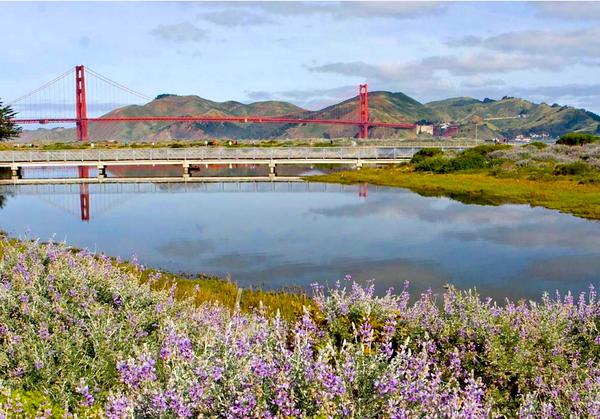
At one time, there were an estimated 540,000 acres of wetlands in the San Francisco area. The 130-acre tract of wetlands located at what is now Crissy Field Marsh in the Presidio once served as home to the native Ohlone people. These wetlands provided an important coastal habitat for harvesting fish and shellfish, as well as for hunting and gathering. Beginning in the early modern era, wetlands were often perceived by western industrial civilizations as "wastelands"...

The Japanese Tea Garden, San Francisco

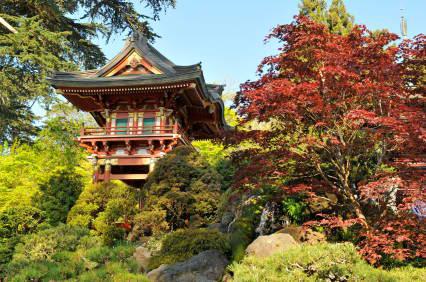
In 1894, a Japanese Tea Garden was created in Golden Gate Park as part of the California Midwinter International Exposition held in the park that same year. This event is more commonly known as the "World's Fair." The earliest version of the Japanese Tea Garden was built by George Turner Marsh for the exposition; however, the site was also expanded considerably by Makoto Hagiwara, who included many additional elements of traditional Japanese art, landscape design, and culture...

Dolores Huerta Peace & Justice Cultural Center

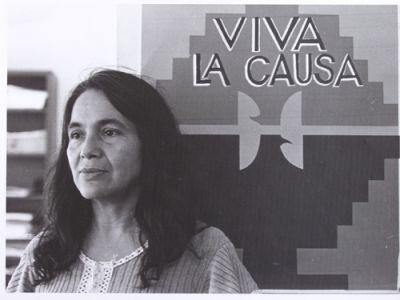
The Dolores Huerta Peace & Justice Cultural Center is scheduled to open at this location in 2022. It will serve as the new headquarters for the Dolores Huerta Foundation. Currently, the property houses the Self-Help Federal Credit Union, which is being incorporated into the design plan for the new cultural center. Dolores Huerta is a legendary activist who was at the forefront of the farm workers movement to improve the lives and working conditions of farm laborers in the United States...

African Methodist Episcopal Zion Church

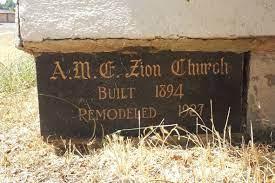
In 1894, an African Methodist Episcopal Zion Church was founded in Redding in a small Gothic Revival style building. Historically, this was an African-American Christian church and denomination. The denomination is also called "AME Zion" (or as simply "AMEZ") for short. AME Zion was officially established in New York City in 1821, although its roots can be traced back even earlier. The AME Zion is particularly significant because it was the first among several Black churches...

National AIDS Memorial Grove, Golden Gate Park

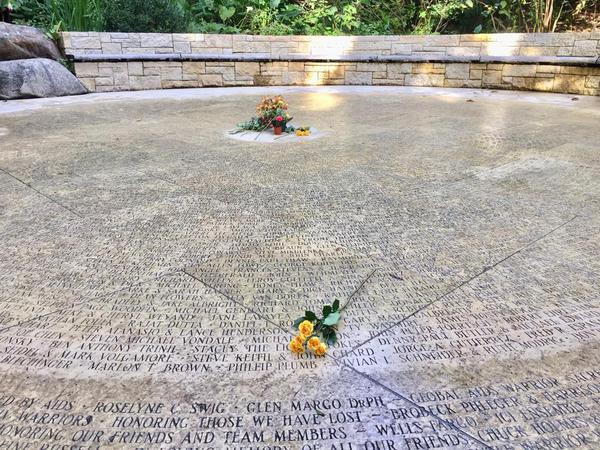
Established on November 12, 1996, the National AIDS Memorial Grove in Golden Gate Park is a 10-acre contemplative space for remembering and honoring all those who have lost their lives to HIV/AIDS. During the late 1980s, amidst the grief experienced by many who recently had lost close friends and family members to the disease, a group of volunteers came together in San Francisco to envision the creation of a memorial in their honor. Also known simply as "The Grove"...

Shakespeare Garden, Golden Gate Park

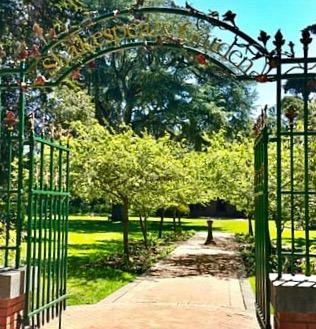
The Garden of Shakespeare's Flowers, known also as the "Shakespeare Garden" in Golden Gate Park, celebrates the English playwright and poet, William Shakespeare, and the numerous references to flowers which can be found in his written works. William Shakespeare was born in 1564 in Stratford-Upon-Avon, England, and he died around 1616. In addition to writing plays, Shakespeare also wrote many sonnets. The Shakespeare Garden in Golden Gate Park...

The Pony Express Historical Marker

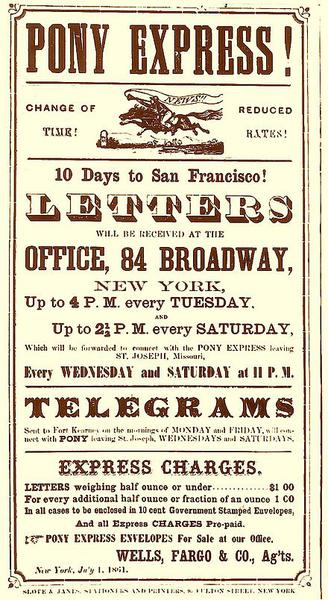
This historical marker commemorates the arrival of the first Pony Express rider in San Francisco on April 14, 1860. The rider completed the final relay leg of the mail delivery route, which departed from St. Joseph, Missouri, ten days earlier, on April 3, 1860. This commencement date from Missouri marked the official start of the Pony Express. To commemorate this event, a historical marker was erected in 1936 by the Oregon Trail Memorial Association. It is also part of the Pony Express National Historic Trail...

SF Society for the Prevention of Cruelty to Animals

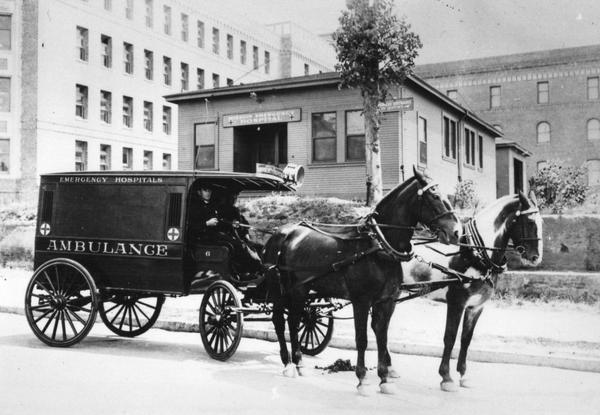
The San Francisco Society for the Prevention of Cruelty to Animals was founded in 1868. That same year, California passed a law criminalizing cruelty to animals. The SF-SPCA advanced a groundbreaking method of medical transport: a horse-pulled ambulance, the first of its kind in the western U.S. Within its first year in operation, this medical transport came to the rescue of six disabled horses. In 1918, the SF-SPCA established a retirement ranch for the city's fire department horses, and in 1924 it opened its first public animal hospital...

Homeland of the Yelamu

This historical marker provides maps and details about the Yelamu tribe that resided near the tidal marshlands at the northern tip of the San Francisco peninsula. The Yelamu lived in the area called Petlunac, traveling seasonally and living gently on the land in kinship groups. They survived through fishing, hunting, and gathering, rather than agriculture. The Yelamu were one of 50 indigenous Ohlone tribes that resided in the Bay Area for millennia, sharing common elements of culture and language...

Ghirardelli Square

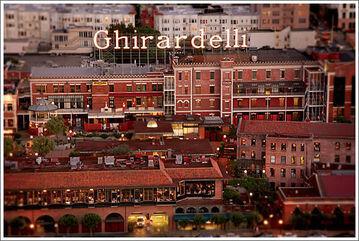
Ghirardelli Square is the site of the Ghirardelli Chocolate Company, founded by an Italian immigrant, Domenico Ghirardelli, in 1852 on the northern waterfront in San Francisco. In 1849, Ghirardelli began selling his confections from a general store in Stockton, CA, to provide basic necessities to miners during the Gold Rush. At the height of his career, Ghirardelli was exporting chocolate across the U.S., as well as to Mexico, China, and Japan. In 1962, the Ghirardelli Building became the first adaptive reuse project...

Historical Entry for TheClio.com: 1890s Bicycle Era

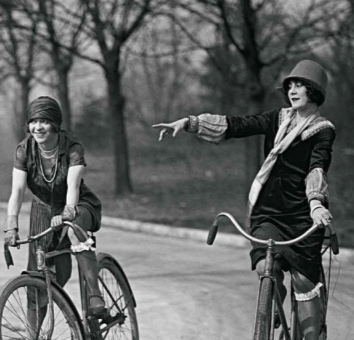
The Golden Age of Cycling historical marker commemorates the bicycle craze that swept the nation in the 1890s. Bicycles provided recreation and freedom -- especially for women, many of whom adopted modern dress and took up the call for female suffrage while cycling through the City of San Francisco, as well as in towns and cities across the country, despite every effort to limit their call for liberty ...